
TOVE, coffee TABLE
Personal project
Made in cooperation with interior architect Marika Rajala.
Tove was selected for Metropolia’s 2025 Habitare booth, but the presentation was cancelled due to scheduling conflicts.
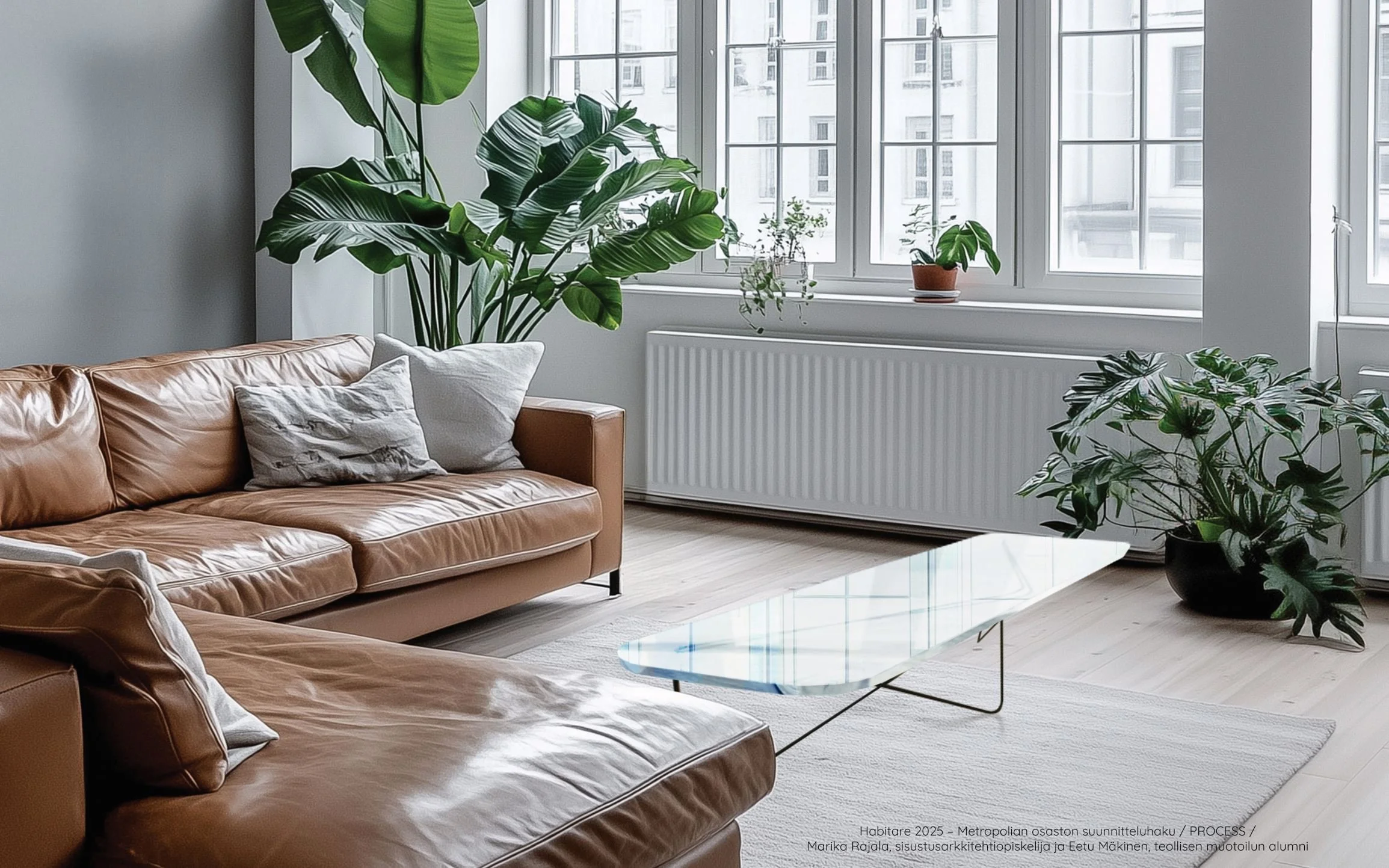
The TOVE coffee table was born out of the designers’ own need. We had been searching for a certain type of coffee table as an interior element for a long time, without success. The space we were furnishing is challenging in shape, and the available options did not meet our expectations.
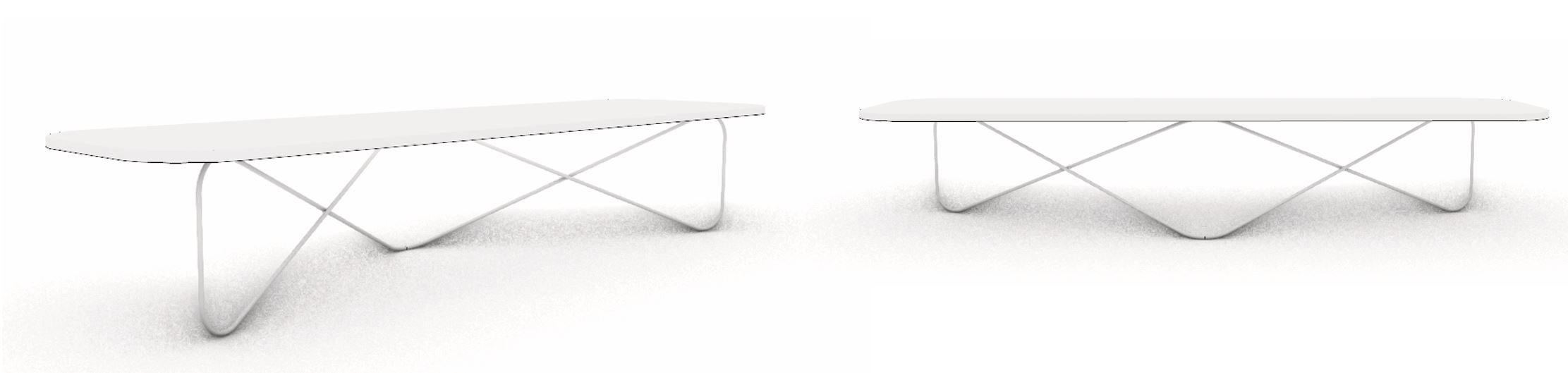
Tove is a coffee table where lightness meets a functional and sturdy structure, creating an inventive solution. The design emphasizes a simple form language, as well as symmetry that connects both elements. However, when viewed from different angles, the structure creates intriguing and dynamic shapes.
Challenge
The project explored how industrial design and interior architecture perspectives could shape traditional materials into a furniture object that feels calm yet visually distinctive.
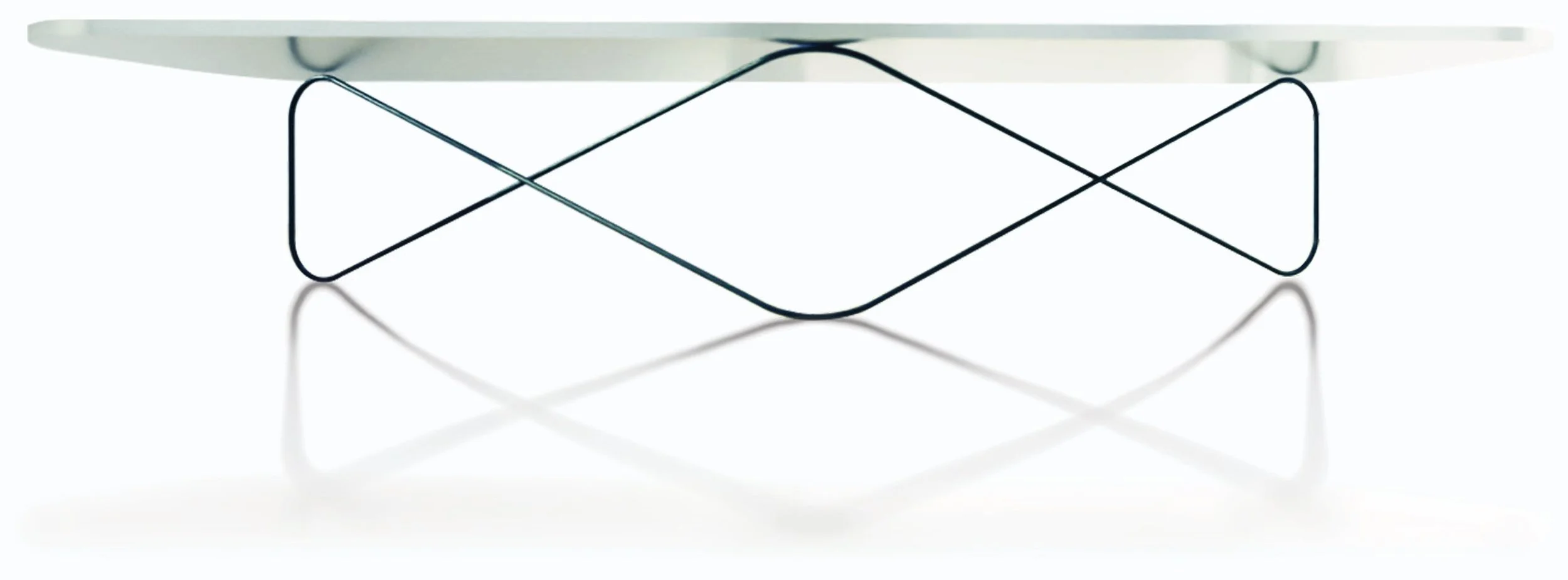
The design process of Tove originally began on a living room sofa. We considered different materials that would work with our existing interior elements. In our home, we favored wood, metal, and glass, so from the very beginning we knew we wanted to work with these materials.
In the final stages of the design process, we decided to leave wood out of the product, as we realized that the metal structure was emphasized in a different way when paired with glass.
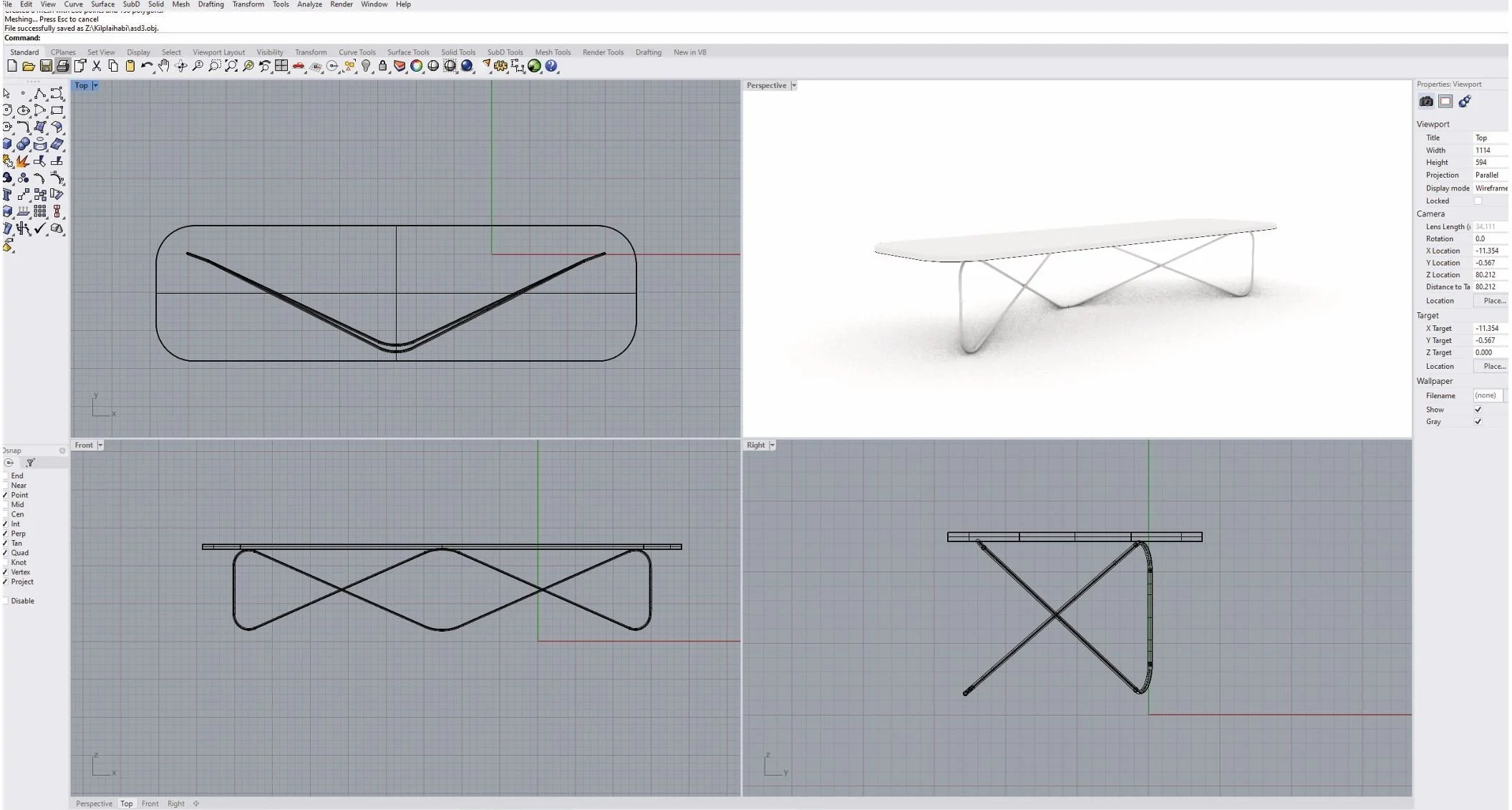
The process continued through idealization and brainstorming. Creating various forms in both physical and digital environments helped drive the project forward.
One of the main challenges during the process was the shape and functionality of the table leg. How could we make it sturdy, yet visually interesting?
The final structure of the leg emerged almost by accident. We mirrored two symmetrical pieces so that together they formed the table leg seen in the current product.
Tove combines the strengths of an industrial designer and an interior architect. Through the different perspectives of two creative disciplines, a functional, human-centered product was created.